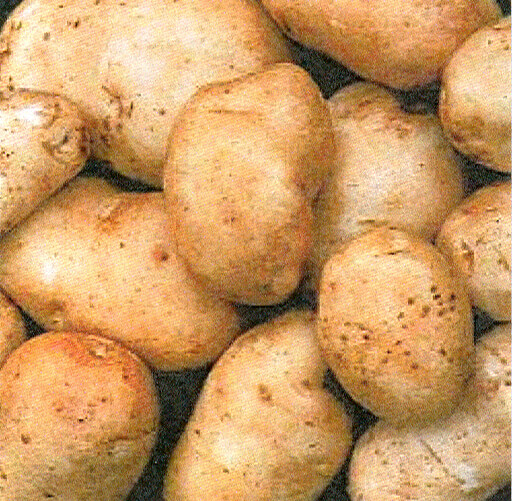

Asparagus, Martha Washington
1 Year Old Root
$2.98
1 Year Old Root
Description
An old american favorite, with high yields.Produces long spears into June, and is rust resistant. Though it takes up space in the garden and time for establishment, no other vegetable gives you as much in return as asparagus. The tall, feathery fronds blend nicely with other perennials and if well established, a bed can produce for up to 15 years. When picking a spot for your bed, find a sunny spot that is well drained that will not be disturbed for years to come. Prepare soil, working in plenty of organic matter. Dig trenches that are about 1 foot wide and 8 inches deep. If planting more than one row, rows should be at least 4 feet apart. In bottom of trenches, mound loose, humus-rich soil that is well composed and wet thoroughly. Place starts 1 foot apart on mound and spread roots out evenly. Starts should be about 6 inches below top of trench. Cover roots with no more than 2 inches of soil and water well. It is very important that as plants grow, you continue to fill trench, never covering the growing tip.Keep soil moist, but not wet during this establishment period.Wait until the second year before harvesting.This will encourage a strong root system that will in turn yield nice asparagus. Leave dead stalks until spring, because it helps to protect root crown. The first season you harvest, do so for only 4 to 6 weeks. Spears are ready for harvesting when they are about 6 inches long. Make sure that plants receive plenty of water and fertilizer. When cutting asparagus, do so at or just below ground level at a 45 degree angle, being careful not to injure new spears. The third year and following years, harvest for 8 to 10 weeks. If you’re tight on space, consider growing your asparagus and strawberries together. Both love water, sun, and fertile ground. Because the strawberries aren’t deep rooted, they don’t seem to compete with the asparagus.For reference only:
#1 container : commonly known as a 1-gallon pot : 152 to 251 cubic inches.
#2 container : 320 to 474 cubic inches.
#3 container : 628 to 742 cubic inches.
#5 container : commonly known as a 5-gallon pot : 785 to 1242 cubic inches.
| Pot Sizes (inches) | Pot Equivalent (U.S. Gallons) | Dry Soil Needed (Approx. cu.ft.) |
| 4″ pot | pint / 0.5 quart / .125 gallon | 0.01 ft3 |
| 5-6″ pot | quart / 0.25 gallon | 0.03 ft3 |
| 7-8″ pot | 1 gallon | 0.13 ft3 |
| 8.5″ pot | 2 gallon | 0.26 ft3 |
| 10″ pot | 3 gallon | 0.40 ft3 |
| 11″ pot | 4 gallon | 0.53 ft3 |
| 12″ pot | 5 gallon | 0.66 ft3 |
| 13″ pot | 6 gallon | 0.80 ft3 |
| 14″ pot | 7 gallon | 0.94 ft3 |
| 16″ pot | 10 gallon | 1.33 ft3 |
| 18″ pot | 15 gallon | 2.00 ft3 |
| 21″ pot | 20 gallon | 2.67 ft3 |
| 24″ pot | 25 gallon | 3.34 ft3 |
| 30″ pot | 30 gallon | 4.01 ft3 |
| Pot Sizes (inches) | International (Liters) | |
| 4″ pot | .5 L [.473] | |
| 5-6″ pot | 1 L [.946] | |
| 7-8″ pot | 4L [3.78] | |
| 8.5″ pot | 7.5 L [7.57] | |
| 10″ pot | 11 L [11.35] | |
| 11″ pot | 15 L [15.14] | |
| 12″ pot | 19 L [18.92] | |
| 13″ pot | 22.5 L [22.71] | |
| 14″ pot | 26.5 L [26.49] | |
| 16″ pot | 38 L [37.85] | |
| 18″ pot | 57 L [56.78] | |
| 21″ pot | 75.5 L [75.70] | |
| 24″ pot | 94.5 L [94.63] | |
| 30″ pot | 113.5 L [113.56] |
Curbside pickup & local delivery available! Order online or over the phone and pick up your order curbside.